What are the benefits of learning programming languages?
why should we study programming languages?

Meet Khansa Mueen, a versatile and dynamic professional whose passion for technology knows no bounds. As a Community Lead, Full Stack Developer, Mentor, Technical Writer, and lifelong learner, Khansa has a wealth of experience delivering innovative and effective solutions. With a proven track record of working on projects of all sizes, She is a self-motivated, self-driven individual always eager to tackle new challenges.
She is a true leader in the tech community, currently serving as a Community Lead and Mentor at Tech Hatch, where they empower Pakistani youth by bridging the gap between education and work. With their technical expertise and organizational skills, she is dedicated to making a positive daily impact.
As a lifelong learner, She brings a fresh perspective to every project, constantly adapting traditional techniques to modern initiatives. Their passion for hackathons and community involvement is a testament to their dedication to the industry. Join Khansa on their journey of growth and discovery in the ever-evolving world of technology.
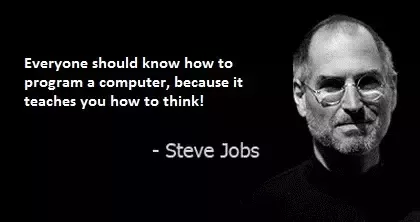
I'd want to know why you’re reading this post before we go into depth about it. There might be a variety of causes for this, including the following:
- You’re a non-programmer curious about how things function in today’s technological world. You’re interested in technology and considering pursuing a career in it.
- You are a novice who has recently entered this area and is unsure whether you made the right decision in picking this career. You may find it frightening, annoying, or even enjoyable.
- You’re an experienced programmer who wants to know how far you’ve gone and what changes you’ve seen since starting out in this area.

There are several causes for this, some of which are enumerated in this article.
Increased ability to communicate programming ideas.
A better foundation for selecting acceptable languages
Improved capacity to pick up new languages
Realizing the importance of implementation
Ability to create new languages has increased.
Increased ability to communicate programming ideas.
The study of programming languages aids in the development of the ability to express programming ideas.
Dijkstra has expressed it this way:
The tools we use have a profound (and devious!) influence on our thinking habits, and, therefore, on our thinking abilities.
That is the instruments employed to articulate one’s thoughts limit one’s ability to think.
The expressive capacity of language influences the depth to which we can think. It covers the types of algorithms you can create. Learning new languages broadens the scope of software development thought processes since such constructs may be mimicked.
A better foundation for selecting acceptable languages
Studying programming languages also aids in the selection of the appropriate language for a specific job.
According to Abraham Maslow,
“To the man who only has a hammer in the toolkit, every problem looks like a nail.”
That is, if your only tool is a hammer, you will tackle every situation as if it were a nail. Some programming languages are better suited to certain tasks than others.
Improved capacity to pick up new languages
Good programmers don’t simply know how to code; they also know how to wrap their heads around a difficult problem and write effective code to solve it. While most programming languages can perform most tasks, each has its own set of advantages and disadvantages. Knowing various languages is beneficial since you may not be able to get the same outcomes with each one. You will have a larger knowledge base and be more likely to be able to solve issues faster and more effectively if you study additional languages.
Acquisition of the syntax and semantics of different programming languages, as well as knowing diverse design techniques, aids in the learning of new languages.
Realizing the importance of implementation
Understanding implementation concerns may sometimes lead to a better understanding of why languages are constructed the way they are. This, in turn, leads to effective language usage. Row vs. column-major is one such example. If a programmer understands that two-dimensional arrays are stored column-wise (column-major) in FORTRAN (whereas they are stored row-wise in most other languages), he will process it column-wise, making it more efficient.
Recursion works in the same way. If a programmer understands how recursion works and how much recursive programs cost, he may utilize that knowledge to create more efficient programs.
Furthermore, certain defects can only be detected and repaired if the programmer is familiar with technical details.
Ability to create new languages has increased.
Learning a variety of programming languages allows one to have a better understanding of the advantages and disadvantages of various language features as well as the challenges that these characteristics might cause. As a result, if one has to create a new language for any reason, this knowledge will be useful.
You Enjoy It More
Depending on your work duties, you may find yourself doing the same (or similar) tasks every day, which may soon get tedious. Knowing various languages, on the other hand, may keep your mind awake and your job duties diverse because you’ll be able to concentrate on multiple tasks at once. You’re more likely to appreciate the task you’re doing and have more fun doing it if you have fresh possibilities and challenges.
Learning a programming language is like learning a foreign language in that after you’ve mastered the second, the third and fourth are considerably simpler. This is because you spend time learning how to learn when learning the second language, and this process gets simpler with practice. You begin to see parallels across languages, which aids in the learning process and the retention of new knowledge. It’s not as difficult as it may appear.
Whether you want to uncover the secrets of the universe, or you just want to pursue a career in the 21st century, basic computer programming is an essential skill to learn. — Stephen Hawking
That’s all
I appreciate your patience in reading thus far. Please share this message with others so they can find their way as well.
Twitter | LinkedIn | GitHub are all places where you can find me.
Have fun Programming ❤.